Body Oil vs. Lotion: It’s Not a Competition, It’s a Double Act
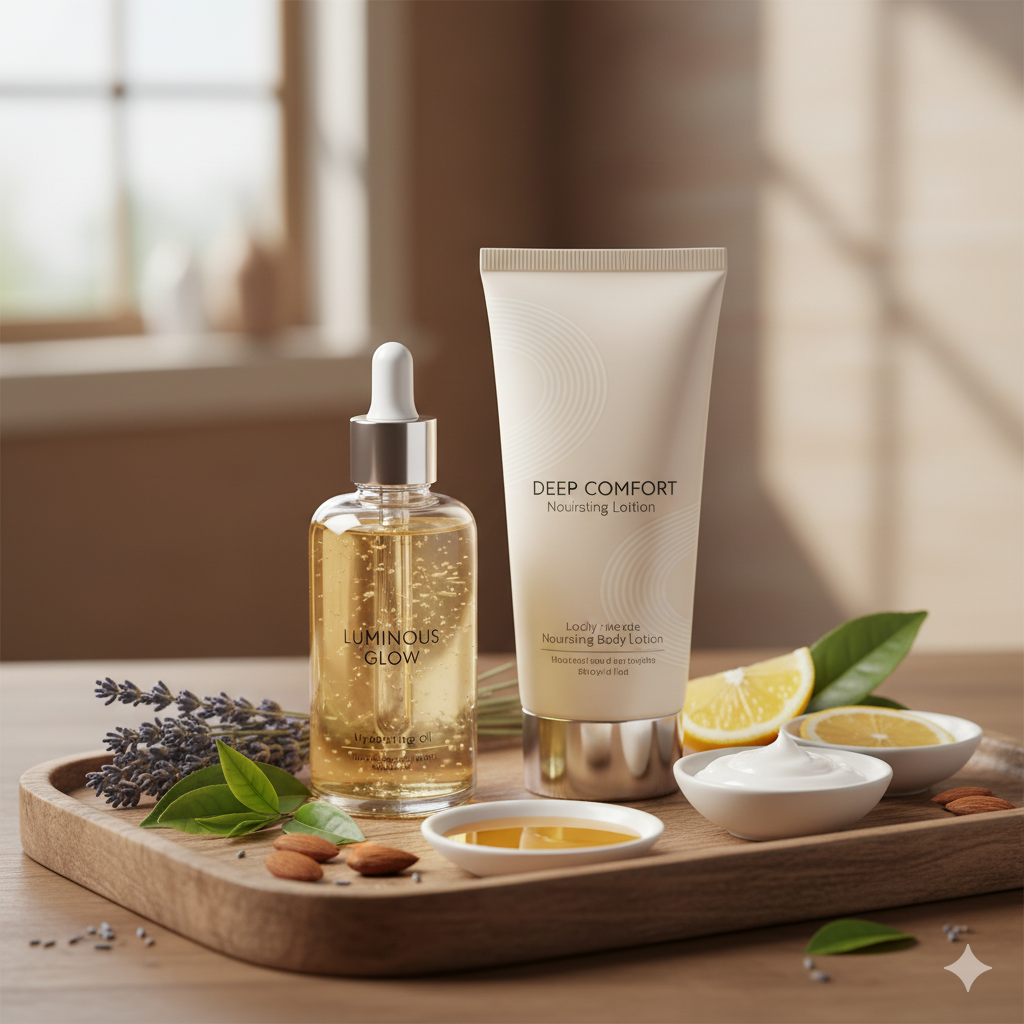
The moisturizer aisle can feel like a labyrinth. Giant tubs of cream, sleek bottles of lotion, and golden glass vials of body oil all promise the same thing: soft, hydrated, glowing skin. But what’s the real difference between a lotion and an oil, and do you need both?
This isn’t about declaring a winner. It’s about understanding the core functions of these two skincare heavyweights. Think of it less like a face-off and more like a carefully choreographed dance. One brings the hydration, and the other brings the sealing power.
Understanding their composition is the key to knowing exactly when and how to use them for maximum benefit, especially if you deal with chronic dry skin or seasonal flakiness.
The Fundamental Difference: Water vs. Oil
The biggest distinction between a body oil and a body lotion comes down to one simple, scientific principle: the presence of water.
1. Body Lotion (The Hydrator)
A body lotion, cream, or milk is an emulsion. That’s a fancy term for a stabilized blend of water and oil.
- Composition: Lotions are predominantly water-based (often listed first on the ingredient list). They contain humectants like Glycerin or Hyaluronic Acid (which attract water into the skin), a small amount of oil or butter (emollients), and emulsifiers to keep the water and oil from separating.
- Function: Lotions are the hydrators. Their primary job is to deliver water deep into the upper layers of the skin (the epidermis). If your skin is dehydrated (lacking water), a lotion is what you need.
- Feel and Absorption: They are lightweight, thin, and spread easily. They absorb quickly, leaving a smooth, non-greasy finish, making them perfect for daytime use or warmer weather.
- The Drawback: Because they contain water, lotions can evaporate from the skin relatively quickly, meaning the moisturizing effect can be shorter-lived compared to a pure oil.
2. Body Oil (The Sealer/Occlusive)
A body oil is exactly what it sounds like: a product composed almost entirely of pure oils (like Jojoba, Argan, Almond, or Coconut).
- Composition: Oils are oil-based and contain virtually no water. They are rich in fatty acids, vitamins (like Vitamin E), and antioxidants derived from plants.
- Function: Oils are the sealers and nourishers. They are occlusive, meaning they form a thin, protective barrier on the skin’s surface. They don’t add water to the skin; they prevent the water you already have (or just added) from escaping (this is known as preventing Transepidermal Water Loss, or TEWL). Oils also act as emollients, filling in the gaps between dry, flaky skin cells to make the skin feel instantly soft and smooth.
- Feel and Absorption: They have a luxurious, often richer texture and can feel warmer on the skin. While high-quality oils (often called “dry oils”) absorb well, they generally take longer than lotions and leave a noticeable, healthy sheen or “glow.”
- The Drawback: Used alone, oils cannot hydrate dehydrated skin. If you apply oil to very dry skin, you’re essentially sealing in the dryness, which is why the application technique is crucial.
Which One Should You Choose?
The best choice depends on your skin condition, the climate, and your time commitment.
| Scenario | Best Choice | Why? |
| Normal/Oily Skin | Lotion | Lightweight, absorbs fast, and provides necessary hydration without adding excess oil that could clog pores. |
| Very Dry/Flaky Skin | Oil (Used Correctly) | The occlusive barrier of the oil is essential to lock in moisture and prevent cracking or chapping. |
| Hot, Humid Climate | Lotion | A lighter, water-based product that evaporates quickly is more comfortable and less likely to feel sticky. |
| Cold, Dry Winter | Oil | The lack of humidity in the air demands a heavy-duty sealant to protect the skin barrier from water loss. |
| Want an Instant Glow | Oil | The natural sheen of an oil instantly restores radiance to dull legs, arms, and décolletage. |
| Need a Quick Fix | Lotion | Absorbs instantly, allowing you to dress immediately without worrying about stained clothes. |
Export to Sheets
The Ultimate Secret: Layering is King
For the deepest, longest-lasting hydration and the most supple, glowing skin, the secret is not to choose between them, but to use them both. This is where the principles of hydration and sealing work together perfectly.
The Golden Rule of Layering: Thinnest to Thickest.
You must apply your hydrating product (lotion) first, and then your sealing product (oil) last.
The Ideal Routine: Post-Shower Perfection
- Prep: Take a warm shower or bath. When you step out, pat your skin gently with a towel until it is damp, but not dripping wet. This is the moisture you are about to trap!
- Layer 1: Hydrate (Lotion/Cream): Apply your body lotion or cream all over your slightly damp skin. This product floods the skin with water-attracting ingredients (humectants) and essential emollients, providing the foundational hydration. Give it a minute to absorb.
- Layer 2: Seal (Oil): Take a small amount of body oil, warm it between your palms, and gently massage it over the areas where you just applied the lotion. The oil acts like a blanket, trapping the hydrating ingredients beneath it and preventing the water you applied (and the water your skin naturally contains) from evaporating.
This two-step method ensures your skin is first moisturized (with water) and then sealed (with oil), delivering a comprehensive and long-lasting glow that will carry you through the coldest winter day or the longest summer flight.
In the world of body care, lotion and oil are not rivals; they are the perfect pairing, each fulfilling a necessary role in achieving truly healthy, soft skin.