The Myth Buster: Sunscreen Tips for Dark Skin Tones
For too long, the narrative around sunscreen has been dominated by images of pale skin burning under a harsh sun. This has perpetuated a dangerous myth: that if you have a darker skin tone, you don’t really need sunscreen.
Let’s be crystal clear: This is false.
While melanin (the pigment responsible for darker skin) offers a natural degree of protection against immediate burning, it does not make dark skin immune to sun damage. In fact, skipping sunscreen can lead to significant and often more visible skin issues for Black, brown, and deep complexions, primarily in the form of hyperpigmentation, uneven tone, and premature aging.
This isn’t about preventing a sunburn; it’s about preserving your skin’s health, maintaining its clarity, and fighting the specific challenges that UV exposure presents to darker skin.
This is your definitive, human-written guide to understanding why sunscreen is essential for deep complexions, and, crucially, how to find a product that works beautifully without leaving behind that dreaded white or purple cast.
Why Sunscreen Is Non-Negotiable for Dark Skin
The main difference between fair and dark skin under the sun isn’t whether damage occurs, but how that damage manifests.
1. The Hyperpigmentation Trigger
The primary concern for deep skin tones is Post-Inflammatory Hyperpigmentation (PIH). PIH is the dark spot left behind after any form of inflammation or trauma—a breakout, a scratch, or, crucially, sun exposure.
- When UV rays hit the skin, they trigger a defensive response in the melanosomes (pigment cells). In dark skin, this defense mechanism goes into overdrive, leading to the excessive production of melanin.
- This results in dark spots, sun spots, and the worsening of conditions like melasma, which can be much harder and slower to fade on darker skin than on lighter skin. Sunscreen is your best defense against uneven tone.
2. The Slow Burn of Photoaging
Everyone ages due to sun exposure (photoaging), but it can look different on deep complexions. While wrinkles might appear later, sun damage breaks down collagen in all skin types, leading to:
- Dullness and Lack of Clarity: The skin loses its natural luminosity and appears muddy or uneven.
- Textural Changes: The skin can become thicker and leathery over time.
- Worsening Scarring: UV rays make old scars and blemishes much darker and more prominent.
3. The Melanin Trade-Off
Melanin provides a natural SPF ranging from 6 to 13. While this is better than nothing, it is far below the Dermatologist-recommended minimum of SPF 30. Relying solely on natural pigment leaves your skin vulnerable to long-term damage and PIH.
Solving the White Cast Problem: A Formula Guide
The single biggest reason people with dark skin skip sunscreen is the awful white, purple, or blue cast left by many formulations. This chalky residue is caused by physical (or mineral) UV filters, primarily zinc oxide and titanium dioxide.
While these mineral filters are highly effective and great for sensitive skin, they sit on the skin’s surface and are difficult to blend into deep tones.
Here is your strategy for finding the perfect, invisible sunscreen:
Strategy 1: The Chemical Filter Advantage
Chemical sunscreens (containing ingredients like avobenzone, oxybenzone, and octinoxate) absorb into the skin and convert UV rays into heat, which is then released.
- Pro: They are completely sheer and virtually invisible on all skin tones. They offer the cleanest application.
- Con: They can sometimes be slightly irritating to highly sensitive skin, and some people prefer to avoid certain chemical filters.
- Shopping Tip: Look for formulas that specifically highlight chemical filters and promise a clear, watery, or serum-like texture.
Strategy 2: The Modern Mineral Solution
If your skin is sensitive and requires a mineral sunscreen (Zinc Oxide/Titanium Dioxide), you need to look for high-tech solutions that have solved the cast issue.
- The Technology: Modern brands use micronized or nano-particle zinc oxide. These particles are milled so finely that they lose their reflective white appearance and blend far better into the skin.
- The Tint: Many mineral sunscreens now come with a universal tint (often iron oxides) to counteract the white hue. Look for sheer, light-to-medium tints that dissolve into the skin tone rather than sitting on top of it.
- Shopping Tip: Always apply these on moisturized skin and rub in small, circular motions. Look for words like “Sheer,” “Tinted,” or “Invisible Zinc.”
Strategy 3: The Hybrid Hero
This is the fastest-growing category. Hybrid sunscreens combine the cosmetic elegance (sheerness) of chemical filters with a small, calming dose of mineral filters. This often results in a broad-spectrum, high-SPF product that feels luxurious and leaves no trace on deep skin.
Sunscreen Application Tips for Dark Skin Tones
It’s not just what you use, but how you use it.
- Don’t Skimp on the Amount: Regardless of skin tone, the rule is the “two-finger rule”: apply a bead of sunscreen down the length of your index and middle finger. This is the minimum amount needed for your face and neck to achieve the stated SPF level.
- Moisturize First: Applying sunscreen on dry, un-moisturized skin can make blending difficult and cause pilling. Apply your regular moisturizer first, let it absorb for a minute, and then apply your sunscreen. This helps the sunscreen glide smoothly.
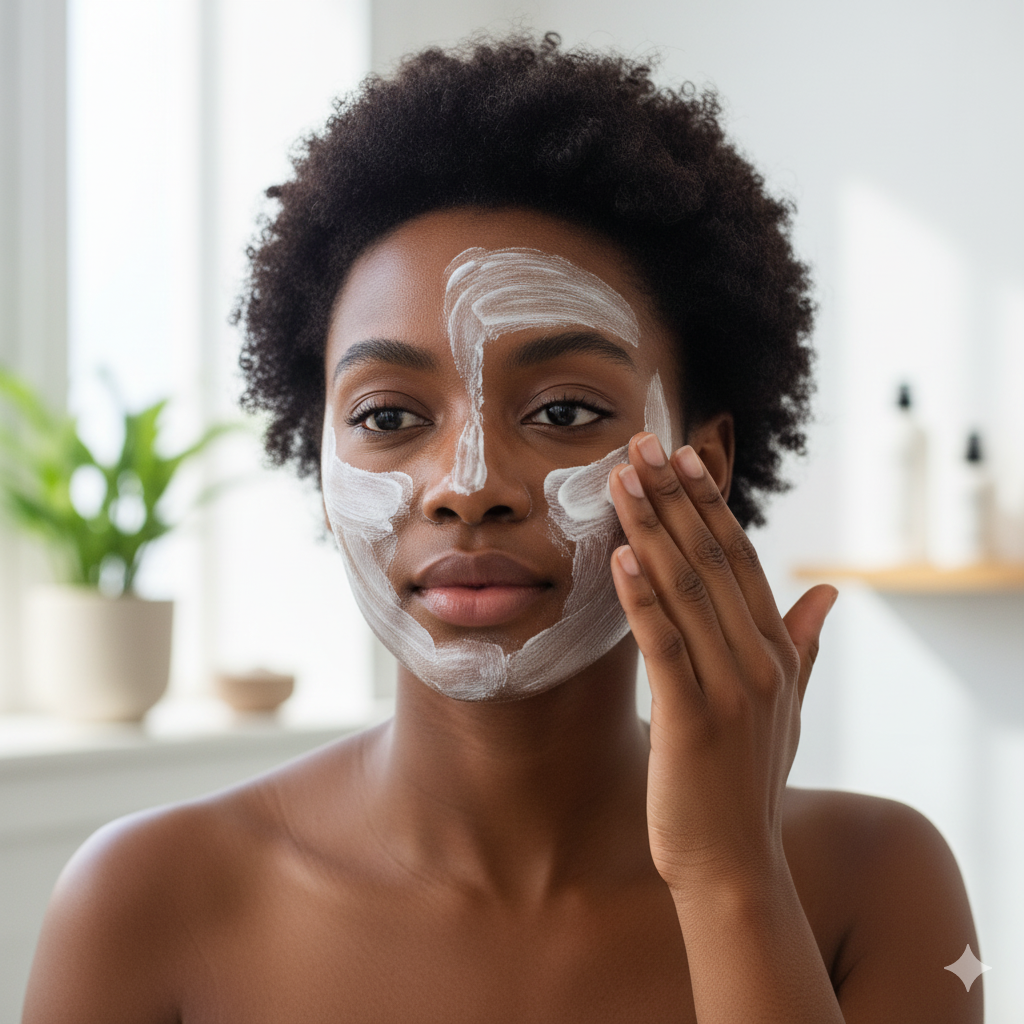
- The Dot and Blend Method: Instead of smearing a large glob, dot the sunscreen on different points of your face (forehead, nose, cheeks, chin, neck). Then, gently blend each dot individually using sweeping, circular motions until it vanishes.
- Treat the Edges: Pay extra attention to your hairline, ears, and the back of your neck. These are common areas of sun exposure often missed, and the contrast of a developing tan here can worsen the look of an uneven complexion.
The Final Word: Protection for Clarity
The conversation around sunscreen needs to shift from simply preventing a burn to preserving melanin health and maintaining skin clarity. For darker skin tones, sunscreen is the number one anti-hyperpigmentation tool and the most effective way to keep your skin smooth, even, and radiant for years to come. Find a formula that works for you, and never let the myth of the “white cast” prevent you from protecting your beautiful complexion.