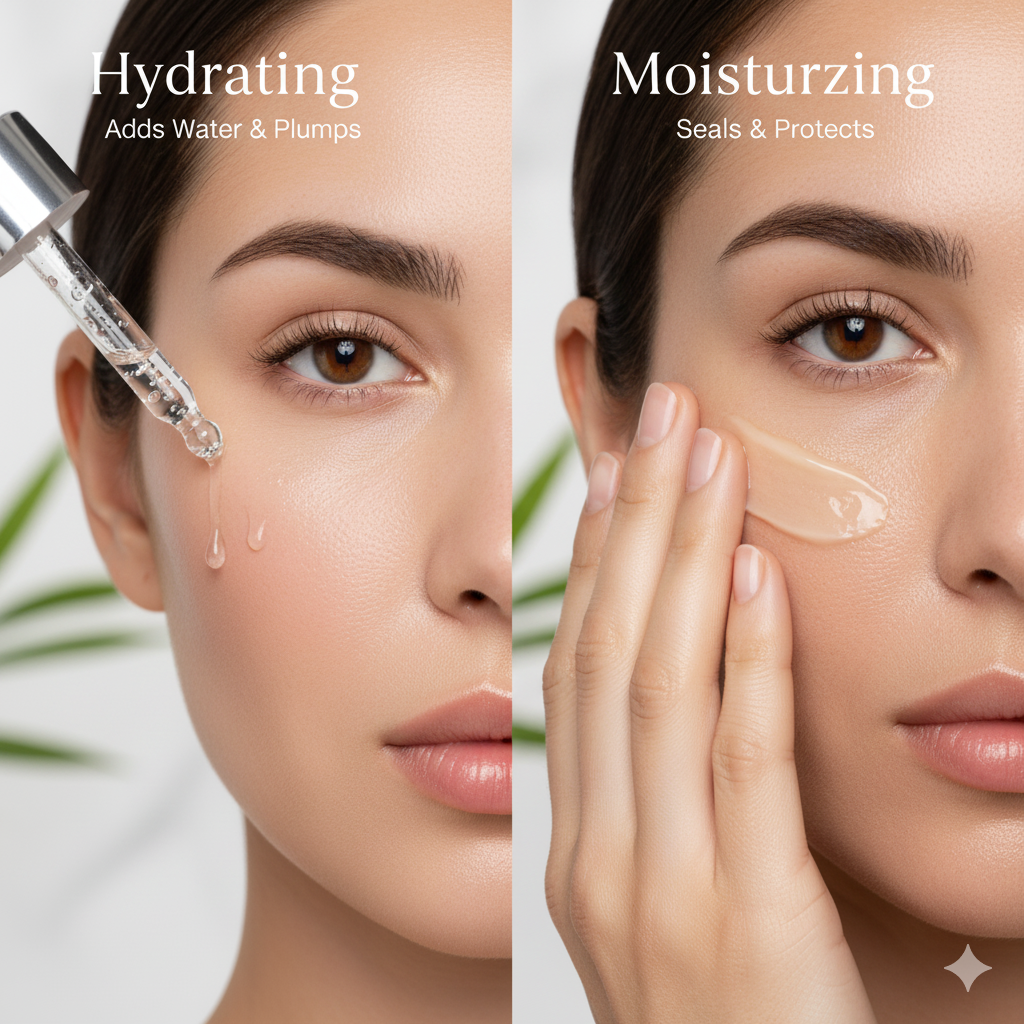
Hydrating vs. Moisturizing: What’s The Difference, Really?
In the chaotic world of skincare, few things are as confusing as the words “hydrating” and “moisturizing.” Brands throw them around like they’re interchangeable, leading to a lot of frustration—and a lot of wasted money—when you end up buying the wrong product for your skin’s actual need.
Here’s the plain truth: they are not the same thing. They are two distinct actions that address two completely different skin issues, and understanding the nuance is the key to achieving that plump, healthy glow we’re all chasing.
Think of your skin like a brick wall. The skin cells are the bricks, and the natural oils and lipids (fats) are the mortar holding everything together. Hydrating is about making the bricks plump and full of water. Moisturizing is about strengthening and sealing the mortar to keep the water from leaking out. You can’t have a solid wall without both strong bricks and strong mortar.
Ready to settle the debate? Let’s break down exactly what your skin is asking for when it feels dry or tight.
Part 1: Hydrating (A Lack of Water)
Hydration is all about putting water into the skin cells.
When your skin is dehydrated, it means it lacks water. This is a common condition that can affect any skin type—even oily or acne-prone skin.
What Dehydrated Skin Looks Like:
- Dullness: The skin looks flat, tired, and lacks luminosity.
- Tightness: It feels taut, especially after washing.
- Fine Lines & Crepiness: Surface wrinkles look dramatically more noticeable, particularly under the eyes or on the cheeks. This is because the skin cells have shriveled up, like a grape turning into a raisin.
- Oiliness (Ironically): Your skin can overcompensate for the lack of water by producing more oil, leading to breakouts and confusion about your skin type.
The Mechanism: Humectants
Hydrating products rely on humectants. These are ingredients that act like sponges, drawing water from the deeper layers of the skin (the dermis) and, if the air is humid enough, from the environment, and bringing it to the epidermis (the surface). They literally fill up your skin cells with H₂O, making them plump up.
Key Hydration Heroes:
- Hyaluronic Acid (HA): The undisputed star. This molecule can bind up to 1,000 times its weight in water.
- Glycerin: A highly effective, classic, and affordable humectant found in almost every good formula.
- Aloe Vera
- Urea
- Alpha Hydroxy Acids (AHAs): Lactic acid and glycolic acid, in addition to exfoliating, are humectants that draw moisture to the skin.
Your Hydrating Product Strategy:
Hydrating products are typically thin, watery, or gel-like. Think toners, essences, and serums. They go on first, often applied to slightly damp skin, to give your skin a deep drink before you seal it in.
Part 2: Moisturizing (A Lack of Oil)
Moisturizing is all about creating a protective barrier on the skin’s surface to lock the water in and prevent it from escaping.
When your skin is dry, it means it lacks natural oils, or sebum. This is a permanent skin type, determined by genetics, though it can be exacerbated by environmental factors.
What Dry Skin Looks Like:
- Flakiness and Roughness: The skin texture is visibly scaly or peeling.
- Itchiness: A common sign that the skin barrier is compromised and exposed to irritants.
- Redness/Sensitivity: The lack of a strong lipid barrier leaves the underlying skin exposed and reactive.
- Oil-Free Appearance: The skin typically looks matte, tight, and can feel like sandpaper.
The Mechanism: Emollients and Occlusives
Moisturizing products contain two main groups of ingredients that fortify the skin barrier:
1. Emollients (The Softeners)
These are oils and lipids that are easily absorbed into the skin. They fill in the tiny gaps between your skin cells, smoothing the texture and restoring suppleness. They are the “mortar” that rebuilds the wall.
- Key Emollient Heroes:
- Ceramides: Skin-identical lipids that are essential components of the barrier.
- Fatty Acids: Such as Omega-3 and Omega-6 (found in Marula, Rosehip, or Jojoba Oil).
- Squalane and Shea Butter.
2. Occlusives (The Sealers)
These are thicker ingredients that form a physical, protective film on the surface of the skin. This heavy layer is what physically prevents Transepidermal Water Loss (TEWL)—the scientific term for water evaporating from your skin.
- Key Occlusive Heroes:
- Petrolatum (Petroleum Jelly/Vaseline): The most effective occlusive available.
- Mineral Oil and Lanolin.
- Thick Waxes (like Beeswax).
Your Moisturizing Product Strategy:
Moisturizing products are typically thick, rich creams, balms, or facial oils. They should always be applied last in your routine (or second-to-last, right before SPF). If you put an occlusive product on first, the thinner hydrating serums won’t be able to penetrate the seal!
Bringing It All Together: The Ultimate Routine
The truth is, most skin needs both hydration and moisturization. Your skin might be genetically dry (lacking oil) and environmentally dehydrated (lacking water) simultaneously.
This is why the best modern moisturizers are often emulsions—blends of water-based humectants suspended in oil-based emollients and occlusives. They are a one-stop shop, but nothing beats intentional layering.
The Simple Layering Rule:
- Prep: Wash with a gentle, creamy cleanser.
- Hydrate: Apply your serum or essence (the humectant layer) to damp skin.
- Moisturize: Apply your cream (the emollient and occlusive layer) to seal the water in.
- Protect (Morning Only): Apply your SPF.
Quick Fix Guide: Identifying Your Need
| If Your Skin Feels… | You Are Lacking… | Your Key Ingredient Type Is… | Focus Product Type |
| Tight, Dull, Crepey, Fine Lines. | Water (Dehydrated) | Humectants (HA, Glycerin) | Serums, Essences |
| Flaky, Rough, Itchy, Uncomfortable. | Oil/Lipids (Dry Skin) | Emollients/Occlusives (Ceramides, Shea Butter, Oils) | Rich Creams, Balms |
Export to Sheets
Stop guessing and start solving! By asking yourself whether your skin is thirsty (needs water/hydration) or hungry (needs oil/moisturization), you can pick the right hero products and finally achieve the skin comfort you deserve.